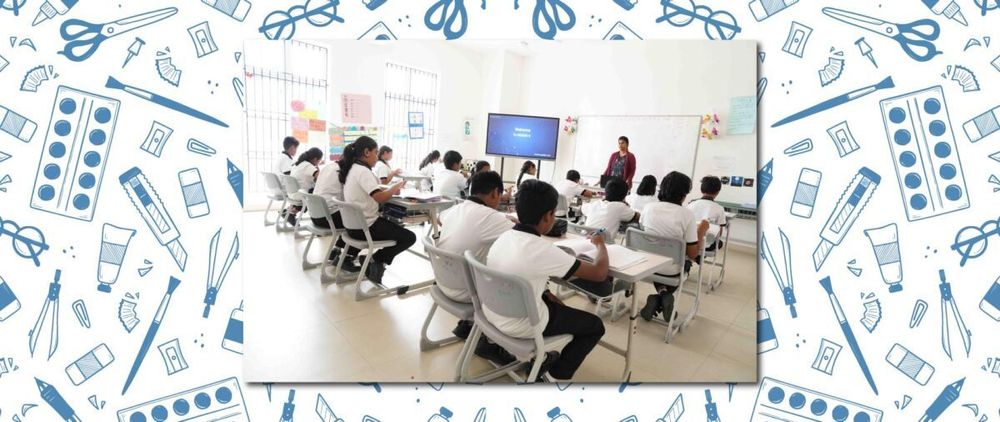
What Is a Smart Classroom? Types, Benefits, and Smart Classroom Learning

2 mins read
What Is a Smart Classroom? Types, Benefits, and Smart Classroom Learning
QUICK SUMMARYReviewed by Academic Team

Smart classrooms make learning more interactive, engaging, and personalized through technology like smart boards and digital content. They improve student participation, understanding, and academic performance while helping teachers manage lessons more effectively. However, successful smart classroom learning depends more on teacher training and implementation than hardware alone.
 

Smart classrooms are no longer just a premium feature offered by a few elite schools. They are quickly becoming the baseline for modern education. As schools try to prepare students for a world built around screens, data, collaboration, and digital communication, the traditional chalk-and-talk model is no longer enough.

What makes this shift interesting is that smart classrooms sit at the intersection of pedagogy and technology. The promise sounds impressive on paper, but the real difference depends on how schools actually use the technology inside the classroom.

From our observations working with schools adopting smart classroom systems, the biggest change has not been the hardware itself. It has been the shift from passive learning to active participation.

What Is a Smart Classroom?

A smart classroom is a technology-enabled learning environment that uses digital tools to improve teaching and student engagement. A typical smart class may include interactive flat panels, digital boards, projectors, cloud-based learning platforms, internet connectivity, assessment software, and multimedia content.

Unlike traditional classrooms that rely heavily on textbooks and lectures, smart classroom learning focuses on interaction, visualization, collaboration, and real-time feedback.

The goal is simple: make learning more engaging, more flexible, and easier to understand.

Why Schools Need a Smart Classroom System

The traditional classroom struggles with two major issues:

  • Passive learning
  • One-size-fits-all teaching pace

Smart classroom teaching solves both problems effectively.

When students can interact with lessons visually through videos, animations, quizzes, diagrams, and collaborative activities, participation naturally increases. One thing we consistently noticed across schools was that attention follows action. The moment students begin tapping, annotating, responding, and interacting, engagement rises significantly.

Schools that adopted structured smart classroom learning models also reported measurable academic improvements within two semesters.

Key Features of a Smart Classroom System

Interactive Whiteboards and Smart Boards

Interactive flat panels have the highest classroom impact because they replace multiple tools at once. Instead of using separate projectors, whiteboards, and textbooks, teachers can manage everything from a single screen.

More importantly, these boards support both teacher-led and student-led learning activities.

Digital Content and Multimedia Learning

One of the biggest advantages of smart technology in the classroom is visual learning. Complex concepts become easier to understand through videos, animations, simulations, and interactive presentations.

For example, science concepts that once required imagination can now be demonstrated visually in real time.

Cloud-Based Learning Resources

Students and teachers can access assignments, notes, recordings, and learning material from anywhere. This flexibility supports blended learning and helps students revisit difficult concepts outside the classroom.

EdTech and Learning Management Systems

Learning Management Systems help schools organize assignments, assessments, attendance, and student performance tracking efficiently. Teachers also get immediate feedback about student understanding instead of waiting until final exams.

Types of Smart Classrooms

Standard Smart Classroom

This setup includes essential tools like smart boards, internet access, and multimedia systems. It works well for schools beginning their smart classroom journey.

Intermediate Smart Classroom

An intermediate smart class adds student devices like tablets or laptops along with collaborative learning platforms and cloud-based tools.

This setup supports more interactive and personalized learning experiences.

Student-Led Smart Classroom

In a student-led smart classroom, students actively participate in presenting, researching, collaborating, and problem-solving using technology.

This model develops confidence, communication skills, and independent thinking.

EXPERIENCE AACHI FIRSTHAND

The Campus will Speak for itself

Experience our Cambridge classrooms, state-of-the-art labs, and vibrant student life in person - then take the next step with confidence.

Advantages of Smart Classroom Learning

Better Student Engagement

The most immediate improvement schools notice is participation. Students who struggle to focus during long lectures often respond positively to visual and interactive learning formats.

At multiple schools, classroom participation levels nearly doubled after structured smart classroom implementation.

Personalized Learning Experiences

Every student learns differently. Smart classroom systems allow teachers to adjust learning pace, provide additional support, and identify weak areas quickly.

AI-powered tools are also moving classrooms toward personalized learning paths where students receive support based on their individual progress.

Improved Understanding of Concepts

Visual learning improves retention significantly. Students understand faster when they can see concepts instead of only reading about them.

One school implementation we observed showed noticeable improvement in science and math scores after integrating smart classroom teaching into regular instruction.

Stronger Critical Thinking Skills

Smart classroom learning encourages collaboration, discussion, and problem-solving rather than memorization alone.

Students participate more actively in projects, presentations, and group activities that improve analytical thinking.

Better Academic Performance

Schools tracking internal assessment data reported score improvements ranging from 15% to 25% within two semesters after adopting structured smart classroom systems.

Attendance and assignment completion rates also improved noticeably.

How Smart Classrooms Support Teachers

Faster Lesson Planning

Teachers can access ready-made digital resources, lesson plans, quizzes, and multimedia content quickly, reducing preparation time.

Better Classroom Management

Smart classroom systems help manage attendance, assessments, assignments, and scheduling more efficiently.

Quick Assessments and Feedback

One of the biggest advantages is immediate feedback. Students no longer wait days to know whether they understood a topic correctly.
That instant correction changes how students study and self-correct.
 

Creative Smart Classroom Teaching

Teachers can create more interactive lessons using videos, simulations, collaborative exercises, and real-time activities.

However, the technology alone does not guarantee success.

The biggest implementation challenge is confidence. Many schools invest heavily in hardware but fail to train teachers properly. We have seen schools use expensive interactive panels as nothing more than large projectors.

Teacher training is the single biggest factor deciding whether a smart classroom succeeds or fails.

Interestingly, peer learning often works better than formal workshops. When teachers see another teacher successfully using smart classroom tools in an engaging way, adoption spreads naturally.

Smart Classroom vs Traditional Classroom

Traditional classrooms mainly focus on lectures and textbook-based learning. Smart classrooms shift the experience toward interaction, collaboration, and student participation.

That does not mean traditional teaching disappears completely.

The most effective schools use blended learning models where teachers combine digital explanation with classroom discussion, projects, and practical activities.

Technology works best when it supports good teaching, not when it replaces it.

Challenges of Implementing a Smart Classroom System

Infrastructure and Internet Access

Reliable internet, maintenance support, and device management remain major challenges for many schools.

Teacher Training

Students adapt to technology surprisingly fast because they already grow up around smartphones and screens.

Resistance usually comes from adults, particularly teachers and parents unfamiliar with smart classroom learning.

Cost and Maintenance

Cost is often seen as the biggest barrier, but the deeper problem is the lack of long-term implementation planning and technical support.

Buying hardware without a content strategy or teacher training plan rarely works.

Privacy and Security Concerns

As schools increasingly rely on digital platforms and cloud systems, protecting student data and maintaining cybersecurity becomes essential.

The Future of Smart Classroom Learning

Smart classrooms are moving toward AI-powered personalized learning environments.

The next generation of smart classroom systems will likely adapt lessons in real time based on where students struggle, learn faster, or need additional support.

Schools planning to adopt smart technology in the classroom should avoid rushing into large-scale implementation immediately.

The best approach is practical:

  • Start with one pilot classroom
  • Train a few enthusiastic teachers thoroughly
  • Measure outcomes for one academic term
  • Expand gradually based on results

Smart classrooms are no longer optional for schools serious about future-ready education. They are becoming the standard expectation for modern learning environments.

Conclusion

The future of education will not be defined by technology alone. It will be defined by how effectively schools combine technology with strong teaching practices.

Smart classroom learning works best when schools focus equally on infrastructure, teacher training, curriculum integration, and student engagement.

Schools that understand this balance are already seeing stronger participation, better academic outcomes, and more confident learners.

The schools that treat smart classrooms as a long-term learning strategy rather than a hardware purchase are the ones seeing the biggest transformation.

Common Queries

Frequently Asked
& Real Answers

A smart classroom is a technology-enabled learning environment that uses digital tools like smart boards, multimedia content, cloud platforms, and interactive software to improve teaching and learning experiences.
PREPARING STUDENTS FOR LIFE

Your Child's Future Starts Here

At Aachi Global School, we go beyond grades - building leaders, thinkers, and confident global citizens from Nursery to Grade XII. Let's begin together.